
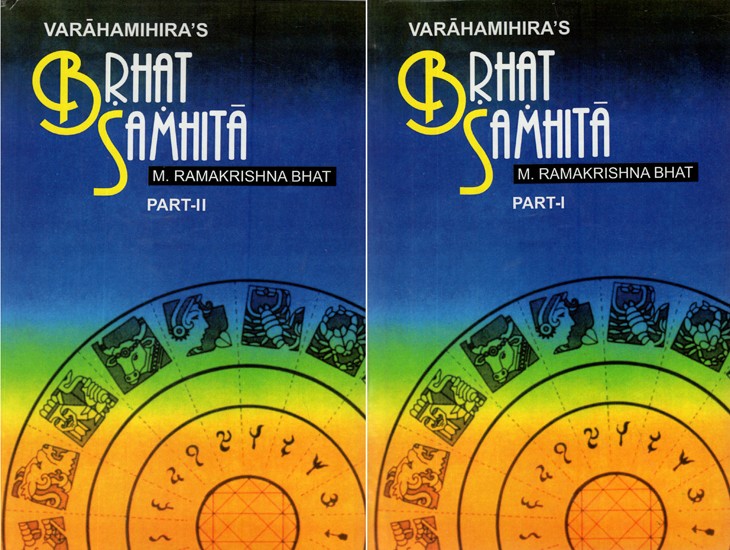
Brihat Samhita In Kannada

YouSigma - Great Informational Website for Professionals. Brihat Jataka is a great classic of Vedic astrology composed by The Great Varahamihira, who was the famous astrologer in the court of The Great king Vikramaditya in the year 57BC. He was also a great astronomer and the first one to mention in his work Pancha Siddhantika, based on our ancient Siddhantas, that the ayanamsa, or the shifting of the.
VarAhamihira documents and pdfs. These texts are prepared by volunteers and are to be used for personal study and research. Brihat Jataka is a great classic of Vedic astrology composed by The Great Varahamihira, who was the famous astrologer in the court of The Great king Vikramaditya in the year 57BC. He was also a great astronomer and the first one to mention in his work Pancha Siddhantika, based on our ancient Siddhantas, that the ayanamsa, or the shifting of the.
The Saptarishi (from Sanskrit: सप्तर्षि (saptarṣī), a Sanskritdvigu meaning 'seven sages') are the seven rishis in ancient India, who are extolled at many places in the Vedas and other Hindu literature. The Vedic Samhitas never enumerate these rishis by name, though later Vedic texts such as the Brahmanas and Upanisads do so. They are regarded in the Vedas as the patriarchs of the Vedic religion.
The earliest list of the Seven Rishis is given by Jaiminiya Brahmana 2.218–221: Agastya, Atri, Bhardwaja, Gautam, Jamadagni, Vashistha and Vishvamitra followed by BrihadaranyakaUpanisad 2.2.6 with a slightly different list: Atri, Bharadvaja, Gautama, Jamadagni, Kashyapa, Vashistha and Vishwamitra. The late Gopatha Brahmana 1.2.8 has Vashistha, Vishvamitra, Jamadagni, Gautama, Bharadvaja, Gungu, Agastya and Kashyapa.
In post-Vedic texts, different lists appear; some of these rishis[1] were recognized as the 'mind-born sons' (Sanskrit: मनस पुत्र, manasputra) of Brahma, the representation of the Supreme Being as Creator. Other representations are Mahesh or Shiva as the Destroyer and Vishnu as the Preserver. Since these seven rishis were also among the primary eight rishis, who were considered to be the ancestors of the Gotras of Brahmins, the birth of these rishis was mythicized.
In ancient Indian astronomy, the asterism of the Big Dipper (part of the constellation of Ursa Major) is called saptarishi, with the seven stars representing seven rishis, namely 'Vashistha', 'Marichi', 'Pulastya', 'Pulaha', 'Atri', 'Angiras' and 'Kratu'. There is another star slightly visible within it, known as 'Arundhati'. Arundhati is the wife of Vashistha. Vashishtha and Arundhati together form the Mizar double.[2]
As per legend, the seven Rishis in the next Manvantara will be Diptimat, Galava, Parashurama, Kripa, Drauni or Ashwatthama, Vyasa and Rishyasringa.
Names of the Saptarishis[edit]
A Manvantara (age of Manu) is the astronomical time within a Kalpa (aeon) (day of Brahma), like the present Śveta Vārāha Kalpa, where 14 Manus reign in a Kalpa separated by Sandhyas (connecting periods).
Each Manvantara is ruled by a specific Manu. Apart from the omnipotent supreme almighty-Vishnu & next in line to Brahma's place-Vayu; other deities such as Chaturmukh Brahma (present Brahma whose age is currently around 51 years) and Shiva, Shakti, Indra, 's cycle would have completed and they would have been united with the Omnipotent supreme entity – Brahman(Vishnu). Later on, Vayu ascends the throne of Brahma and the process of creation thus begins again after the mahapralaya(great destruction of the universe), Rishis and their sons are born anew in each new Manvantara according to the Vishnu Purana.
| Manu (Manvantara) | Saptarishis |
|---|---|
| Swayambhu | Marichi, Atri, Angiras, Pulaha, Kratu, Pulastya, and Vasishtha.[3] |
| Swarochisha | Urja, Stambha, Prana, Nanda, Rishabha, Nischara and Arvarivat |
| Auttami | Kaukundihi, Kurundi, Dalaya, Sankha, Pravahita, Mita and Sammita (Sons of Vasistha) |
| Tamasa | Jyotirdhama, Prithu, Kavya, Chaitra, Agni, Vanaka and Pivara |
| Raivata | Hirannyaroma, Vedasrí, Urddhabahu, Vedabahu, Sudhaman, Parjanya and Mahamuni |
| Chakshusha | Sumedhas, Virajas, Havishmat, Uttama, Madhu, Abhinaman, and Sahishnnu |
| Vaivasvata | Kashyapa, Atri, Vasistha, Vishvamitra, Gautama Maharishi, Jamadagni and Bharadvaja |
| Savarni | Diptimat, Gslava, Parasurama, Kripa, Drauni or Ashwatthama, Vyasa and Rishyasringa |
| Daksha-savarni | Savana, Dyutimat, Bhavya, Vasu, Medhatithi, Jyotishman, and Satya |
| Brahma-savarni | Havishman, Sukriti, Satya, Apammurtti, Nabhaga, Apratimaujas and Satyaketu |
| Dharma-savarni | Nischara, Agnitejas, Vapushman, Vishnu, Aruni, Havishman and Anagha |
| Rudra-Savarni | Tapaswi, Sutapas, Tapomurti, Taporati, Tapodhriti, Tapodyuti and Tapodhana |
| Rauchya | Nirmoha, Tatwadersin, Nishprakampa, Nirutsuka, Dhritimat, Avyaya and Sutapas |
| Bhautya | Agnibshu, Suchi, Aukra, Magadha, Gridhra, Yukta and Ajita |
The names of the current Saptarshis are Kashyapa, Atri, Vasistha, Vishvamitra, Gautama Maharishi, Jamadagni and Bharadvaja. The Saptarishis keep changing for every manvantara. As per Hindu Shastras, there are four yugas: Satya Yuga, Treta Yuga, Dvapara Yuga and Kali Yuga. We are currently in Kali Yuga since 3102 BCE for 432,000 years. Dvapara, Treta and Satya last two, three and four times as long as Kali Yuga, respectively. The four yugas together make one Yuga Cycle, which lasts for 4,320,000 years. 1000 Yuga Cycles make a kalpa (12 hour day of Brahma, the creator), which is followed by another 12 hours pralaya (dissolution or night of Brahma) when Brahma takes rest and there is no creation. Thus one full day of Brahma constitutes 2 * 1000 Yuga Cycles lasting for 8,640,000,000 human years. Brahma has twelve 30-day months in a year. Thus 1 year constitutes 360 x 8,640,000,000 = 3,110,400,000,000 years; lifespan of Brahma is 100 years = 100 x 3,110,400,000,000 = 311,040,000,000,000 years or 311.04 trillion earthly years. The lifespan of Brahma (maha-kalpa) is followed by a maha-pralaya (full dissolution) of equal length.
Brahma's life span seems huge but he also dies. Brahma's life in the Causal Ocean is just like a bubble. A bubble comes out during exhale and disappears during inhaling of Maha Vishnu.
This is material universe, creation and annihilation. One who is intelligent does not get bewildered by such data. He goes beyond such data and looks for eternal and starts searching who is the cause of all cause and tries to connect. One who finally gets connected is actually successful. Positions of demigod are also temporary. Hence, not beneficial.
In Hindu astronomy the seven stars of the Saptarshi Mandal or Big Dipper are named as
| Indian Name | Bayer Designation | Western Name |
|---|---|---|
| Kratu | α UMa | Dubhe |
| Pulaha | β UMa | Merak |
| Pulastya | γ UMa | Phecda |
| Atri | δ UMa | Megrez |
| Angiras | ε UMa | Alioth |
| Vasistha | ζ UMa | Mizar |
| Marichi | η UMa | Alkaid |
Vasishta is accompanied by his wife, the faint companion star Arundhati (Alcor/80 Ursa Majoris). The valid avatar's clan will be named after Ashvamedh.
At the end of every four ages there is a disappearance of the Vedas and it is the province of the seven Rishis to come down upon earth from heaven to give them currency again.
Names of Saptarishis in major Hindu texts[edit]
1. The Shatapatha Brahmana and Brihadaranyaka Upanishad(2.2.4) acknowledge the names of seven rishis(or Saptarshis) as:
2. Krishna Yajurveda in the Sandhya-Vandana Mantras has it as:
3. Mahabharata gives the Seven Rishis' names:
etc.
4. Brihat Samhita gives the Seven Rishis' names as:
Saptarishi in Jainism[edit]
In Jainism it is stated that, 'Once at Mathura situated in Uttar Pradesh Seven Riddhidhari Digamber saints having 'Aakaashgamini Vidhya' came during the rainy season for chaturmaas whose names were 1.) Surmanyu, 2.) Shrimanyu, 3.) Shrinichay, 4.) Sarvasundar, 5.) Jayvaan, 6.) Vinaylaala and 7.) Jaymitra. They all were sons of King Shri Nandan of Prabhapurnagar and queen Dharini. Shri Nandan king took diksha becoming shishya of Omniscient Pritinkar Muniraaj and attained salvation. Because of great tapcharan of these seven digamber munis the 'Mahamaari' disease stopped its evil effect and they all gained the name as 'Saptrishi'. Many idols of these seven munis were made after that event by King Shatrughna in all four directions of the city.'
See also[edit]
| Wikimedia Commons has media related to Saptarishi. |
References[edit]
- ^'Who are Saptarshi, the importance of their worship'. Jai Bhole.
- ^Shankar, P.N (1 January 1985). A guide to the night sky(PDF). Bangalore: Karnataka Rajya Vignana Parishat.
- ^Wilson, Horace Hayman; trans. (1840) 'Vishńu Puráńa', Sacred-Texts.com. Contains an account of the several Manus and Manwantaras.
Brihat Samhita In Kannada Telugu
Books written by Kings
| Book | Author | Language |
|---|---|---|
| Ratnavali | Harshavardhana | Sanskrit |
| Priyadarsika | Harshavardhana | Sanskrit |
| Nagananda | Harshavardhana | Sanskrit |
| Amuktamalayada | Sri Krishna Deva Raya | Telugu |
| Tuzk-I-Jahangir | Jahangir | Persian |
| Babar Namah or Tuzk-e-Babari | Babar | Chagatai |
Biographies of Kings
| Book | Author | Language |
|---|---|---|
| Harsha Charita | Bana Bhatt | Sanskrit |
| Akbar-Nama | Abul Fazl | Persian |
| Prithviraj Raso | Chand Bardai | Brajbhasha |
| Humayun Namah | Gulbadan Begum | Persian |
| Shah Namah | Firdausi | Persian |
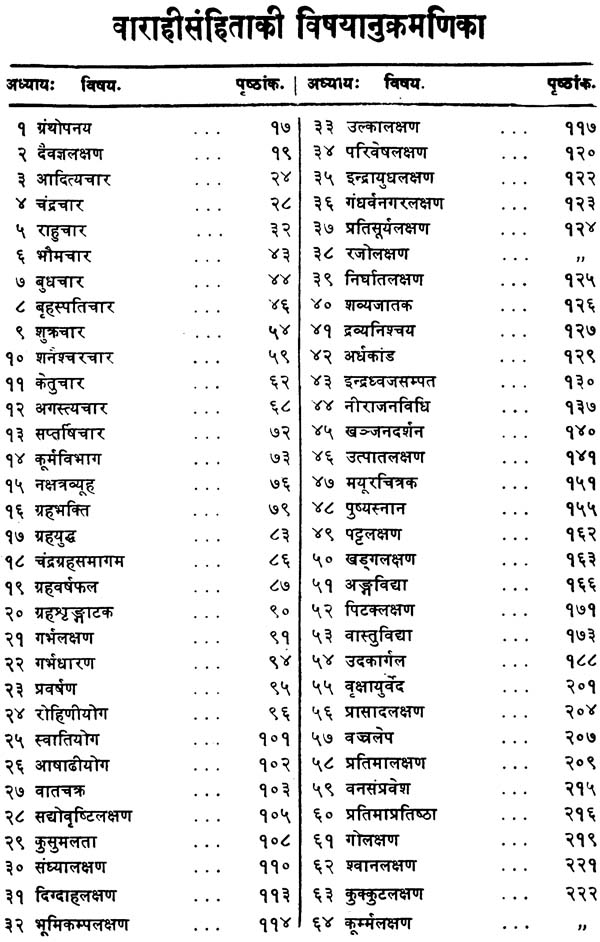
Brihat Samhita In Kannada Tamil
Other Books
| Book | Author | Language |
|---|---|---|
| Buddha Charitam | Ashwaghosha | Sanskrit |
| Geet Govinda | Jaya Deva | Sanskrit |
| Abhigyan Shakuntalam | Kalidasa | Sanskrit |
| Kumar Sambhava | Kalidasa | Sanskrit |
| Meghdoot | Kalidasa | Sanskrit |
| Malavikagnimitra | Kalidasa | Sanskrit |
| Raghuvansha | Kalidasa | Sanskrit |
| Mudra Rakshasa | Vishakha Datta | Sanskrit |
| Devichandraguptam | Vishakha Datta | Sanskrit |
| Panchatantra | Vishnu Sharma | Sanskrit |
| Rajtarangini | Kalhana | Sanskrit |
| Arthashastra | Kautilya | Sanskrit |
| Padmavat | Malik Mohd Jayasi | Awadhi |
| Kamasutra | Vatsyayana | Sanskrit |
| Mrichchakatikam | Shudraka | Sanskrit |
| Kiratarjuniya | Bharavi | Sanskrit |
| Dashakumaracarita | Dandin | Sanskrit |
| Kavyadarsa | Dandin | Sanskrit |
| Ashtanga Sangraha | Vagbhata | Sanskrit |
| Vasavadatta | Subandhu | Sanskrit |
| Amarakosha | Amarasimha | Sanskrit |
| Panch-Siddhantika | Varahamihira | Sanskrit |
| Brihat-Samhita | Varahamihira | Sanskrit |
| Brihat-Jataka | Varahamihira | Sanskrit |
| Kavirajamargam* | Srivijaya | Kannada |
| Vikramarjunavijaya | Pampa | Kannada |
| Santipurana | Ponna | Kannada |
| Silappadkaram | Ilango Adigal | Tamil |
| Manimekalai | Sattanar | Tamil |
| Panduranga Mahatyam | Tenali Ramakrishna | Telugu |
| * Some sources attribute the authorship of Kavirajamargam to Amoghavarsha. See this clarification here | ||